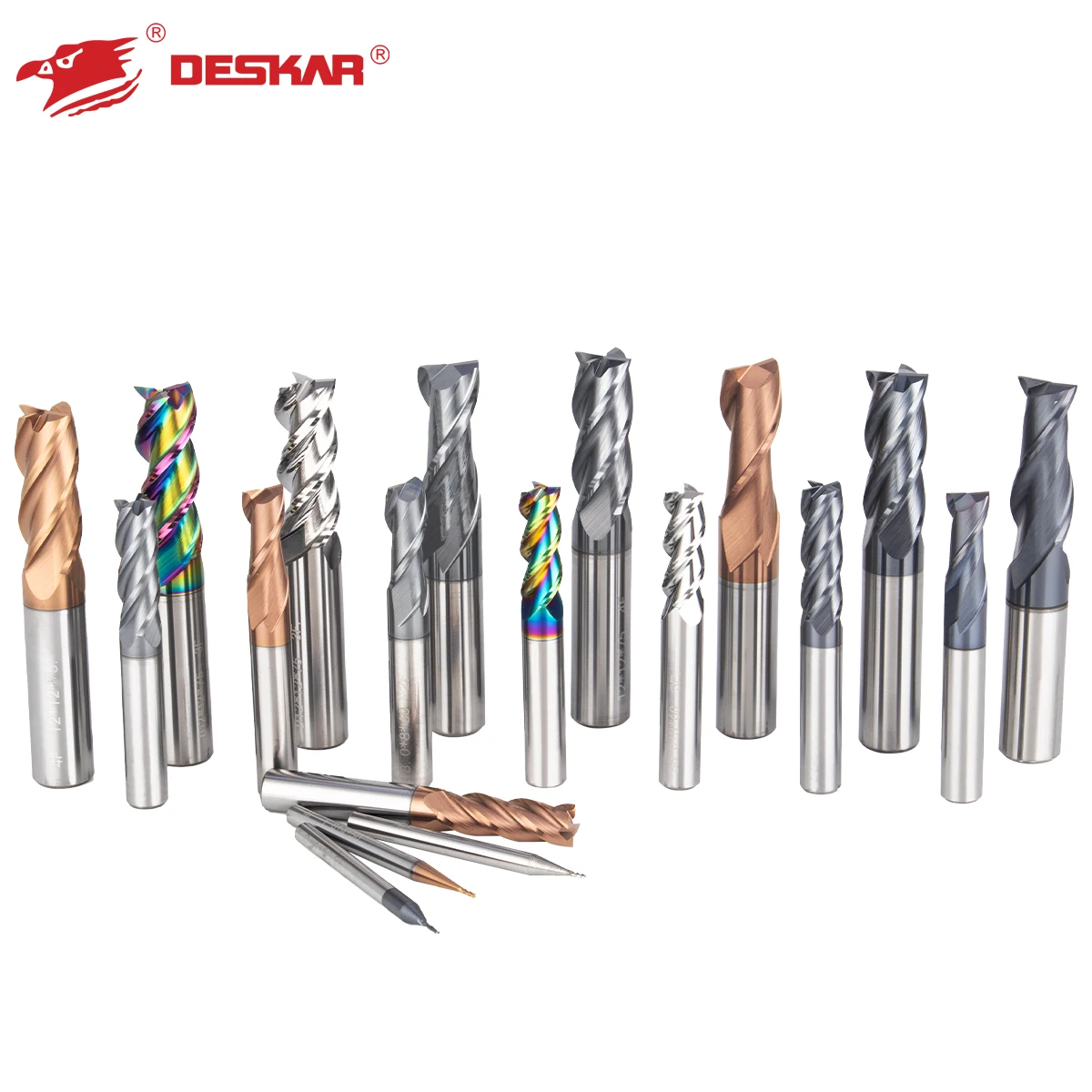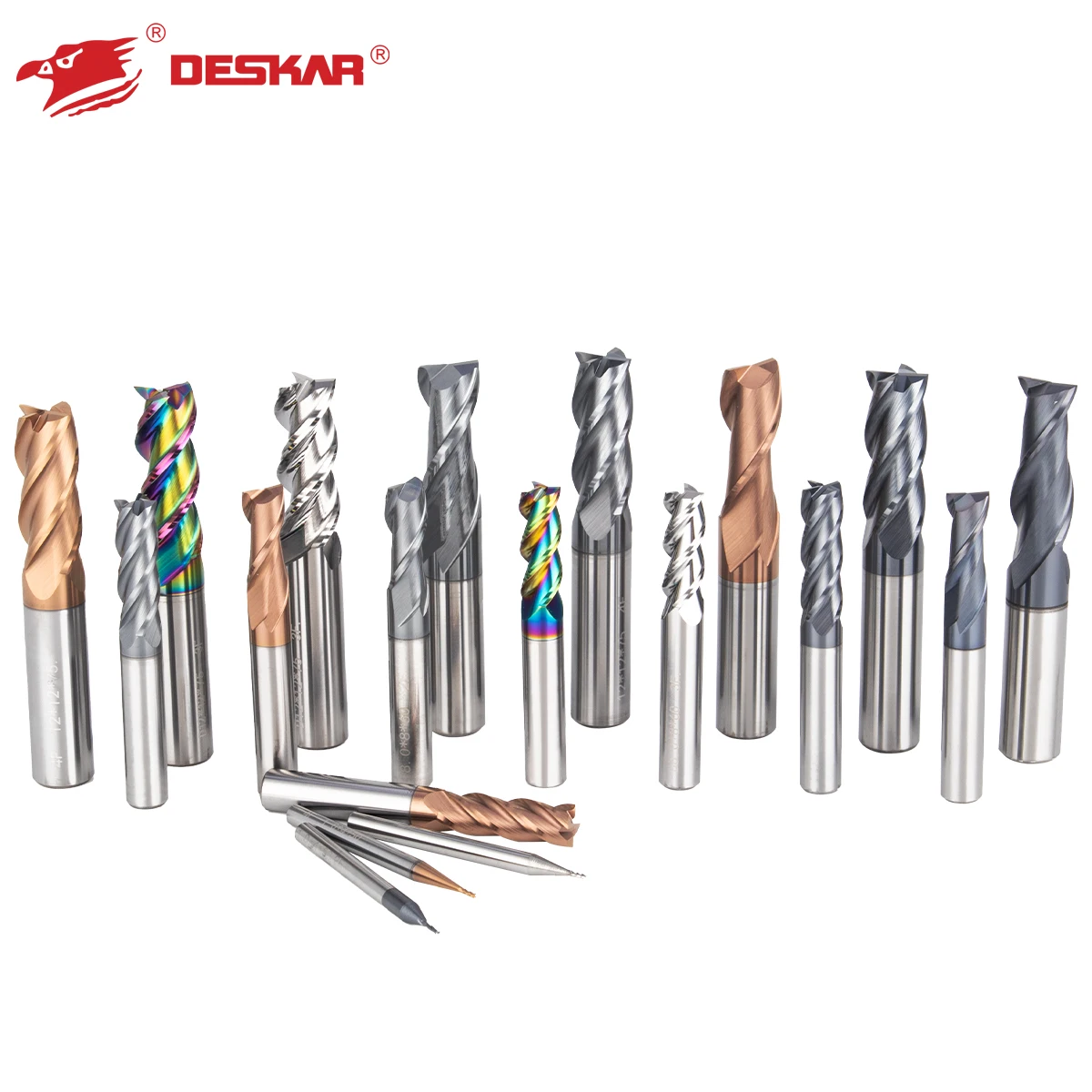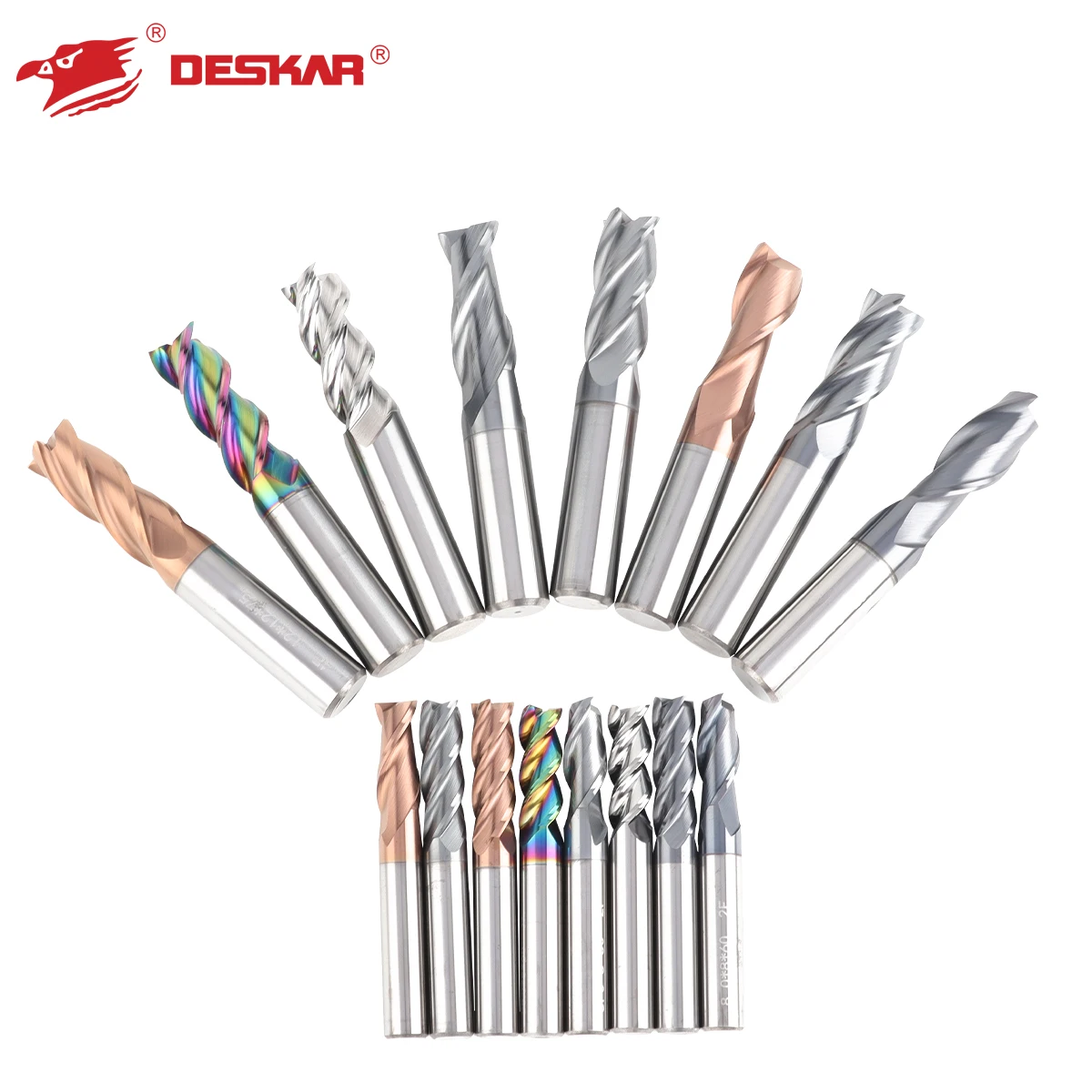
CNC end mill bits are convenient for a wide range of projects. They are similar but smaller, sharper and come in various shapes and sizes for cutting other things as well. It would be really helpful for you to know how to choose and the types of CNC end mill bits. Now let’s start with your DESKAR CNC end mill bits!
Types of CNC End Mill Bits Before you decide to design, develop or mill items out of these products, it’s beneficial to take a step back and review the types of CNC end mill bits you have to choose from. Three popular types are flat end mills, ball end mills, and corner radius end mills. Various types have special features that make them good for different jobs.
When you choose a CNC end mill bit, you should consider the material you’ll be cutting, how you want it to look and how precise the cutting will need to be. For metal or hardwood, you can consider carbide CNC end mill bits, which are strong and heat resistant. In the case of softer materials such as plastic or foam, high-speed steel end mills are an excellent choice.
And don’t forget the number of flutes the end mill bit has. More flutes can produce finer finishes but may require slower speeds. Select an end mill bit with the appropriate number of flutes for the job.
Carbide CNC end mill bits Widely used and popular because of the hardness, the life of the use is a very long time. They’re heat-resistant, and won’t chip or break as easily as high-speed steel bits. This gives the carbide end mills more value as a long-term investment.
The carbide end mill bits are also excellent for precision. With their fine point of 0.5mm they deliver neat prints and precisely cut lines - ideal for intricate patterns. And when working with metal, wood or plastic, these carbide CNC dremel router end mill bits deliver it.
Taking care of your CNC end mill bits This brings us to how to take care of your CNC end mill bits Thanks to this advice, they will last longer and ensure the best results for your projects such as chair mats for carpet.